Wednesday, July 19, 2006

NewsbytesFuzon’s lead guitarist Shallum and ex-Noori drummer Gumby will be performing in the World Music Festival in Oslo this August. Shallum has quite a load of work, considering that the launch of Fuzon’s second album Neend Na Aye Teray Bina, is expected to happen this summer. Regarding their performance in the Oslo World Music Festival, Shallum and Gumby will be collaborating with Fryd (pronounced: freed), a band of a Norwegian origin. Shallum first came in contact with Fryd at the launch ceremony of Telenor Pakistan where Fryd and Fuzon were asked to perform. Following that initial performance, Shallum, Gumby and Fryd have performed several gigs together, the most recent being during the winter season of 2005.

Shallum and Gumby will be leaving for Norway on August 14th, 2006. They have plans of staying back after the Oslo Wold Music Festival and collaborating with Fryd on an album, which will have an international release, targeting a more global audience.

Following Shallum and Gumby’s escapades to Norway is Overload. Yes, Overload is also scheduled to participate in the Oslo World Music Festival this August. Besides the Norweighn festival, Overload is expected to perform several gigs in Amritsar (India) and in New York (USA) in the near future.

Other than just doing shows around the world, Overload is also working on their next music video for the track “Storm” from their self-titled debut album. The video for Storm is completely animated and is directed by Shehryar Jabbar of Sherry’s Studios.

The success of Overload has encouraged Farhad Humayun (drummer and founding member of Overload) to work on Rumble Fish, a project he had previously shelved. Embodying a sound different from that of Overload’s but also a percussion band, Rumble Fish is a concept inspired by the Francis Ford Coppola film, Rumble Fish (1983). It will also see the band members of Rumble Fish try their hand at singing.

Currently working on a video for their yet-unreleased track, “Have to let go sometime” from their debut album “One Light Year at Snail Speed”, Sajid and Zeeshan expect to release the video on television following the launch of their album this summer.

Zeeshan Parwez from Sajid and Zeeshan on the other hand, has also been very busy working on the video for Ali Azmat’s song “Teri Parchaiyaan” from his album Social Circus. Following the animated video trend he sparked off, the video for Teri Parchaiyaan sees Zeeshan attempting to fuse traditional 2D and 3D animation into one project.

He is also currently working on two videos for the Mekaal Hasan Band. One of the videos, “Kirwani” is expected to follow the pattern of “Jhok Ranjhan”, as a performance-based video, yet exploring it with its own unique angle. Zeeshan’s second video for the Meekal Hasan Band will be for the track “Hunsdhun”. Conceptually based, the video will not feature any of the band-members and has been shot in the tribal areas. The Hunsdhun video is expected to be released on television by the end of August 2006.

Photographs: the one on top is one of Overload's performances, the one at the bottom is of Sajid and Zeeshan.


First Published:

World Music Magazine
July August 2006

Saturday, July 15, 2006

Soul Survivor
Jehanzeb has had one thing dominate his life throughout and it’s the only thing he’s known in its entirety —to sing. In an age when most children learn the subtleties involved in communicating with others, Jehanzeb hosted his own concert and pulled it off well.

Growing up in the presence of one of the best Ustaads the country has to offer and learning how to balance school work and a regular life on top of that, Jehanzeb has come a long way. His popularity tripled after the release of his song Ek baar kaho tum meri ho and the release of his album, Parastish received critical acclaim. Despite entering in to the pop-music industry, he stuck to the genre of music he was trained in —classical— sparking off a whole new trend of fusing classical with pop. He has been lauded for the composition of his songs and the depth in his voice, but criticized for the solemnity pertinent in all of them, appealing to a more mature audience.

Having been acquainted with Ahmed Jehanzeb since the early ‘90s — when he was considered to be the Wonder Boy, a title given to him by Khaleej Times when he was four years old — one had known him to be somewhat shy and reclusive than, comfortable around his keyboards and music. It has been over ten years since we last interacted and Ahmed hasn’t changed much: he is still shy, very reclusive and quieter than most people. This time, however, Jehanzeb has plans and opinions, and he wants people to know what they were.

Having experienced the fickle nature of fame from a very young age, Jehanzeb confesses that “I’ve really cut my act down” when it comes to interviews, whether print or electronic. One wonders whether this has more to do with the negative press coverage he had been receiving lately rather than by personal choice. He talks about how he has retired from the limelight and then laments that media professionals here do not employ basic courtesies that are required when dealing with an artiste. Elaborating on work ethics, he opines, “During concerts, an artiste should just come, perform and leave. He should not linger on and he shouldn’t check girls out.”

On meeting Jehanzeb, one wonders what he has been up to these days. “This is something I’ve wanted to talk about,” he says, getting excited. “I’ve signed up with a company in India with the name of Tips.” His contract with Tips spans over five years and requires that he create and produce five albums for the company, one album a year. “I now have the opportunity to work with the individuals I’ve always looked up to,” he says. “If I want to work with A. R. Rahman, he would just be a phone call away.” Optimistic about the decision he's made, he goes on to state that the same company will be opening up in Paksitan as well. He also mentions that the rights of his upcoming album, My Pakistan, have been contracted locally.

Does this mean that Jehanzeb has now decided to join the breed of cross-over musicians like Adnan Sami Khan? “It is somewhat like that,” he says. “I’ll be spending a greater part of the month in India but I will come down to Pakistan now and then. India is like my office where I go to work.” He wants to clarify that he moved to India to work and not to spite Pakistan. He further supports his stand of moving to India by saying that “Even if I get a good place to work in Nigeria, I will move there because I need to work.”

Having said this, Jehanzeb suddenly sits up straighter, as if something just occurred to him, and leans forward, “I would like to state something very clearly,” he says very seriously. “I am not a part of any local television channel or company.” One wonders whether he is referring to the Indus Television Network that he joined in August 2001. He further elucidates that rumors regarding his legal commitment to a local company had been a major hindrance in the closing of his contract with Tips. He mentions receiving threats about banning him from TV during the time his negotiations with Tips were underway.

For a while, he appears to be lost in thought, as if quietly agitated. Then he starts talking about art and culture in Bombay and laments that in Pakistan, we haven’t realized what culture is all about and have dragged unrelated extremist religious elements into it. “Keep your religion to yourself,” he states. He lauds the present government’s enthusiasm in developing the media industry.

Going on about Bombay and the Indian entertainment industry, he considers working in Bollywood as a step ahead in furthering his career as an artiste. “Bollywood provides you the platform from where you can get to places in Hollywood. It’s really easy to grab, if you have the potential.” He opines that the other reason why India is so culturally strong is because music and art are treated as a part of the school curricula; if a person wants to pursue education in the fields of music, he/she would be guided properly via schools and vocational institutes.

He emphasizes the need for Pakistani people to give local artistes the respect they deserve. Otherwise, the most prolific musicians would continue to leave the country. Ahmed gives the examples of Aamir Zaki among these and declares that we are losing Asad Ahmed from Karavan as well. Oddly enough, this particular point of view echoes with those of certain other musicians as well, leading one to wonder whether most working artistes feel underappreciated the way Jehanzeb does.

One sincerely hopes that Jehanzeb manages to realize his full potential as a musician by working in India. But whether working in Hollywood is the concluding peak in a musician's career— and more so, is Bollywood the gateway to success— remains debateable.However, he does strike the bull's eye when he says ours is a budding industry, and because it is still in its infancy, it will take time for people to develop proprieties when dealing with musicians and artistes.


cr
edits: photograph taken by Rizwan-ul-Haq.

personal note: one of my least favorite. super edited pieces.

First Published:
Images
July 16th, 2006

Sunday, July 09, 2006

Celebrating music in Norway

Music in Norway is more than just a part of culture; it is a part of who the Norwegians are. The country plays host to over 200 music festivals a year, with each festival belonging to a specific genre of music, embraced by people of all ages and backgrounds. So how did two bands from Pakistan end up getting invited to a music festival being held in Oslo, Norway, this August?

For Shallum Xavier, the lead guitarist for Fuzon, the story began when the band was invited to perform alongside a Norwegian band Fryd (pronounced ‘freed’) at the launch ceremony of a Norwegian cellphone company in Pakistan. Following that, Fuzon was invited to perform at the anniversary of the same company in Norway where they ended up performing a couple of extra gigs. The money from those additional gigs was donated to the Red Cross Society.

Fryd visited Pakistan again last year in hopes of collaborating with Fuzon, but by then, Fuzon was deep into recording their upcoming album and found it difficult to accommodate what Fryd had in mind. Not wanting their trip to go to waste, Shallum introduced ex-Noori drummer Gumby to Fryd and together they performed at several venues in Karachi, including a recorded live performance for a television channel. Shallum and Gumby are now due to leave in mid-August for Norway where they have plans of staying back and possibly working with Fryd on producing an album, having an international release and targeting a more global audience.

Excited at the prospect of the Norwegian trip and potential that it holds, Shallum says, “It is a positive step towards our goal and what we want to achieve as musicicans. It’s great for the Pakistani music industry because this doesn’t happen all the time. These musicians happen to be one of the best in Europe and will help people around the world understand what actually happens in Pakistan. People here will also realise that there are places in the world that appreciate good quality music.”

Speaking of festivals, Farhad Humayun of the band Overload comments: “Festivals are the best mode of promoting cultures because there is a huge variety of musicians from different countries. It’s also a difficult platform because each artiste is being judged instantaneously and the audience decides right there and then whom they like. It’s easy to get booed off stage if they don’t like you. Usually when bands from Pakistan go abroad, they play to desi communities; they have very limited space for growth in terms of popularity. Festivals are made for bands like us.” Overload is also going to perform in the music festival in Oslo this August.

Following Overload’s trip to Japan, Faizan Peerzada of the Rafi Peer Theatre Workshop received a phone call from a group called Horizons, asking him to arrange for the band to perform in Norway. What resulted from the conversations and ensuing meetings was that Overload would not only be performing at the Norwegian festival but would also do gigs at local venues that would not be festival-related. And like Shallum and Gumby, they will also be collaborating with musicians there. Jan Gaberek (pronounced Yan Gaba-rek), a well-known Norwegian saxophone player, is also playing the potential candidate, although nothing has been confirmed regarding his participation yet.

Farhad talks about the upcoming event: “It’s great to play overseas because the true success of an artiste is when he breaks the language, cultural, social and economic barriers and spreads his art all over the world. Plus, Norway is crazy about music and we’re hoping for a great audience which really inspires us on stage. The expected attendance per day is 44,000 people.”

He elaborates upon Overload’s collaboration with international artistes, “Overload is all about a hybrid culture; we aim to work with all kinds of players. Right now we’re touring and playing with Pappu Saen and Joora Saen from the local scene, but we’re constantly on the lookout for new interesting sounding instruments, singers and players.”

Where one wishes them well on their trip to Norway, it would be interesting to see the result of these individual collaborations by our local artistes with the Norwegians. Who knows, they might even create a whole new genre of music. The future is full of possibilities and if local musicians keep on getting invited to perform in festivals abroad, a music festival in Pakistan may happen sooner than expected.


Photos:
—
1st photograph: Shallum Xaveir doing his thing.
—
2nd photograph: Puppo Sain and Farhad Humayun from Overload in Japan.
—
3rd photograph: Overload bandmembers in Mexican hats during their Japan tour.
—
4th, 5th and 6th photograph: Fryd bandmembers – Hildegunn Oiseth (brunette in red), Mocci Ryen (blonde with pink pillow) and Ingrid Kindem (brunette in blue).

First Published:
Images
July 9th, 2006

Saturday, July 01, 2006

A summer serenade


She arrived on stage with a smile, dressed in a shimmering turquoise chooridar pajama; she stood poised, looking directly at the audience, still smiling. Taking a cue from the song that started playing, she began to dance, a relatively simple Bharatnatyam sequence, and than the CD skidded. Smiling apologetically, she whirled off stage towards the sound technicians and had them play it again.

The CD skidded a second time, and looking strained, she
whirled off the stage and whirled back in again after having a word with the technicians. The sound gave away in between, but she continued with her tatkaar with her ghungroo providing the necessary music, slowly building up tempo and not missing a beat even when the sound came on. She would hit the climax of each tatkaar with a sharp tap of her foot. Her expression changed with each gesture and she mouthed some of the words.

A seasoned entertainer, Sheema Kirmani
knows how to grab the attention of her audience gracefully. Despite the bloopers that occurred where the music was concerned, she maintained her poise and her eye contact with the audience throughout the performance, who were following her every move. What was heartening to note was that despite her age, she still had the agility of a young dancer. The short sequence ended with a bang of her foot on the floor, the sound of her ghungroo resonating in the small hall, her body in the position of salam. With a captivating smile, she whirled off stage, apologising for the breaks in the performance.

The Alliance Francaise celebrated World Music Day last weekend, providing a mixture of classical, jazz, blues and a little bit of old school rock. It was a combination that could prove to be disastrous if not planned out well, and this event had been well planned. Following Sheema Kirmani was a performance by an underground band, The Strange Brew. The original line up of The Strange Brew comprises Brendon on vocals, Olsen on lead guitar, Gareth on bass, John on keyboards and Arnie (Arnold Xavier) on drums. During this performance however, Simien Xavier was on the lead, Melvin on saxophone and with Janelle accompanying Brendon on vocals, the band started off with Cocaine, an Eric Clapton classic.

Although they spent a good 10 minutes in tuning their instruments and doing the sound-checks, with Brendon asking the audience if there was a drummer among them since they’d lost theirs (Arnie jumped on stage soon after), they had everyone’s feet t
apping from the moment they started. The vocalist pulled off Eric Clapton well and seemed to be comfortable on stage. Janelle joined Brendon in Fever, which was reminiscent of the duet performed between Ray Charles and Natalie Cole. Janelle sang well but did not seem to have the assertiveness that was apparent in Brendon. The audience was asked to sing along in the chorus of the third song, Mustang Sally and then the mood softened up with a Steely Dan cover of Pretzel Logic. The band wrapped it up with a Santana classic Oye Como Va which was delivered well.

Overall, the band had pulled off a very good live performance, with Simien Xavier towering over all the performers. And although he has a shy persona on stage, he managed to deliver a simple yet soulful guitar solo.


After a break of about 10 minutes entered The French Kissers (a last minute name coined by drummer Gumby) inviting laughter from the audience, for Gumby had on his head a huge afro while Shallum sported a Barney hat. The line up of this band was star-studded with Immu and Shallum from Fuzon on keyboards and lead guitar re
spectively, Khalid Khan from the band Aaroh on bass and Gumby on drums. They started off by performing an instrumental that Immu had composed, with Gumby ending it by being downright fierce on the drums.

Gumby’s afro came off during his performance and he made no effort to put it back on his head, even after the instrumental was over. Shallum took centre stage and introdu
ced their vocalist for the night, Omar Akhtar. Omar, the vocalist for a band called The Aunty Disco Project, came on stage and launched into an Eric Clapton classic Before You Accuse Me, which he delivered almost to perfection, adding his own energetic touch to it. The crowd loved him.

It was Shallum’s moment to shine in the second song which started without a pause after the first with Immu clearly having fun on the keyboards. Unfortunately, the sound of the vocalist was so loud that the lyrics became incoherent, a
problem that surfaced repeatedly throughout the performance. The energy that Omar depicted while performing, however, was infectious.

Shallum provided the backing vocals for Seal’s number Prayer For The Dying with Immu playing like a magician on the keyboards. Although a very talented singer, Omar could not pull off Seal as well as his other performances, and this was a song in which the musicians stood out more than the vocalist.

It came as a pleasant surprise to see Khalid Khan, normally a very shy and reserved person, vying for a position front stage. Comfortable with his guitar, he seemed to have embodied a whole new character based on assertiveness, self-confidence and with a need to display his mastery over the bass. He was clearly enjoying himself and wanted more from the audience.

The best part of the evening came in the form of an electrifying solo by Immu in the midst of a song, that was followed by Shallum, while on the other hand, Khalid and Gumby seemed to be playing against each other. Omar cam
e back with I Shot The Sheriff, a Bob Marley song, which was followed by the James Brown classic I Feel Good, which had everyone on their feet and boogieing. And that was where it should have ended because Omar didn’t deliver the next song All Along the Watchtower by Bob Dylan as well.

From Sheema’s classical rendition to The Strange Brew’s feet-tapping blues to The French Kissers’ high-energy performance, the night w
as fun and a refreshing change from the typical rock or classical performance. If there was one event that could cater to a diverse audience, this was it. Despite the slip-ups, the event started relatively on time and ended before midnight. Where The Strange Brew put up a mature performance and one hopes to see more of them in the future, the night was dominated by The French Kissers. Never has one seen each member of an ensemble hold his own like they did.

Photographs:
— photograph on top is of Sheema Kirmani
— photograph in the centre is of Khalid Khan
— photograph on the bottom is of The Strange Brew


First Published:

Images
June 2nd, 2006

Wednesday, June 28, 2006

The ezine story
[Community]

From the first ezine to the current, this article seeks to solve the following questions: what is an ezine? Where did it come from? And
where is it headed?


Ezine, how many internet users can actually relate to that word? More so, what exactly is an ezine? According to Wikipedia ‘an ezine is a periodic publication distributed b
y email or posted on a website’. So technically, an ezine is a publication posted periodically on a website and is also part of the spam emails that one is constantly receiving from various organisations promising all sorts of miracles in return for a seemingly small amount they would periodically charge on one's credit card.

What really constitutes an ezine then? Further investigation needed to be done since the definition provided by Wikipedia did not have much to offer. Most ezines have an option through which readers can post their comments on an article or to reply to the comments posted by other readers. All this leads to what is known as ‘online interaction’. This naturally leads to the following question: what is then the difference between an ezine and an online forum?


An ezine is an electronic publication which is periodically updated and is either sent via email or is uploaded onto a website. An online forum on the other hand invites members to engage in discussions regarding a certain topic or subject of interest. Since most ezines have the ‘comment-on-the-article-posted’ option, an online forum could also be part of an ezine. Therefore, part of an ezine could also act as somewhat of an online forum. But an online forum is not an ezine. Make sense?

The next question that pops up is whether ezines are a recent phenomenon? Are they a product of the internet boom? Or have they been around for a lot longer than most people think? Online sources claim that the first ever ezine was a result of a Do-It-Yourself (DIY) media and the computer hacker network called Cult of the Dead Cow (cDc) which was formed in 1984. The name was derived from the Hexadecimal value DE AD BE EF (read dead beef), the value depicting the debugging method used for initialising unused memory. The cult's goal was “Global Domination through Media Saturation” and were the pioneers not only in developing the first ever ezine, but had also begun to exchange audio files in MP3 format in 1997, long before it became common. They were the first hacker group to have their own Usenet newsgroup (alt.dan.cult-dead-cow) and also developed and released different software for system administration. They invited journalists and hackers to most of their conferences, stayed in touch via underground ezines and now maintain their own web-log on their website. In fact, cDc gained media attention and credibility after one of their members briefed President Clinton on internet security and they were the first ever hacker group to receive official approval by the United States government to “export strong encryption in their 6/4 System application”. In summary, cDc was the first ever ezine, created in 1984 by an underground hacker group and steadily gained popularity with time reaching the height of their notoriety when the United States government sought their guidance concerning internet security and granted them permission to export strong encryption in one of their application programs.

Moving over to the subcontinent, more specifically towards Pakistan, it can be safely said that the first ever ezine is Chowk.com. Launched and maintained by a group of Pakistanis and Indians, Chowk.com was formed in 1997 and was created as a “platform to publish, discuss and debate writings on a variety of issues that are important to the people of India, Pakistan and other South Asian countries and a place to express and exchange ideas, discover eclectic thoughts, get useful information, meet new people, engage in social change” and for the enjoyment and education of the reader. With time, Chowk.com has managed to amass over 20,000 registered members and contains 3,500 published articles. The articles are not confined to a specific genre or subject. The writer or a reader can talk about and comment on practically anything as long as they conform to the guidelines which mainly has to do with refraining from using abusive language or causing another member undue discomfort. Pushing the technicalities aside, Chowk.com provides for a good read with well-rounded articles and interesting discussions taking place amongst the writers and the readers. The privileged few who get to keep their own columns (rightfully so) have their work arranged in a chronological order which makes it easy to access the articles by a specific writer. Chowk.com also offers the option of a reader emailing an article to a friend or ‘monitoring’ an article and the comments made on it by other readers.

With time, Chowk.com has managed to attract a variety of readers from diverse backgrounds and varied age groups. It would be difficult to profile the Chowk.com reader because of the way they have categorised articles on their websites. There is a section for those who like to discuss current affairs, a section dealing purely with fictional literature, one section about the issues pertaining to the society, another on anything related to a person's academic life and so on. The Chowk.com reader could be anyone or of any age and gender.

Another ezine, now dead, is Bandbaja.org. The brain-child of Safwat Saleem and under the patronage of Nadeem Farooq Paracha, Bandbaja.org was created in 2003 by several college students to promote quality entertainment journalism. It rounded off a healthy and loyal following soon after its launch. According a Wikipedia, it was known for its “blunt views and the promotion of modern popular music as a social and even political tool.” To the disappointment of many regular readers, the website went offline in 2005. Although rumours are being circulated of Bandbaja.org making a come-back soon, there have been no valid claims in support of that.

For those who knew about Bandbaja.org, it provided endless hours of good reading and a medium through which they could feel ‘connected’ to others who share their point of view on the musicians within the industry. Mainly composed of individuals with an active interest in the comings and goings of the entertainment industry, the typical Bandbaja.org reader would have to be someone between the ages of 14 and 32. Their reviews and interviews mainly covered current musicians which is why it is assumed they did not have much of an older audience.

The success of Bandbaja.org propelled a rapid growth of desi entertainment ezines all over the internet. Some of them include TheSaturdayPost.com, Revaj.com, and Raw.com.pk. Sadly, none of them measure up to the quality of work that made the Bandbaja.org articles stand out. Chowk.com on the other hand has managed to do amazingly well for itself, improving quality of content with time. Ezines can prove to be a valuable source of information for many with people already using it them as references. Realising the potential that ezines hold, many newspaper and television channels have ‘internet editions’ of their publications and programmes. Ezines are relatively easy to create as all a person needs to do is register a domain name and get contributors. The only drawback is that there is no way a certain piece of information can be validated and information may at times prove to be unreliable. Also, when it comes to ezines, one is led to conclude that Pakistani ezines have yet to explore areas other than just entertainment and literature.

First Published:
Spider
July 2006

Monday, June 26, 2006

Second time lucky?


With a career spanning over 17 years, Ali Haider has seen it all. Both his personal and professional lives have followed a similar pattern: he arrived with a bang in the early 1990s, stole people’s hearts with his shy smile and pop-tunes and he continued to do so until late in the decade. Enjoying one hit after another, he was the only local artiste to have released over 13 albums (10 of which went multi-platinum), until the release of his album Jadu.

Although critically acclaimed, Jadu — a trance album — did not do well with the masses and marked the beginning of the fall of his popularity. Around the same time, from having enjoyed a spotless reputation throughout his career, he was suddenly up against scandals that seemed to follow him everywhere. He retreated from the limelight and, after a while of reclusion, has now returned fresh with no qualms about his past.

In this exclusive interview to Images, Ali spills the beans on what he has been up to. With one single from his upcoming album, Jab Kabhi, already making rounds on the tube, he plans to release his 14th album, Janey Do, in September. Further elaborating upon how this album is going to be, he says, “I will be changing my sound in this album the way I did in Jadu. It’s not exactly trance, but it is something from Ali Haider.” With self-composed melodies and compositions, some of the songs in the album have been written by Anwar Maqsood, while Shahi, Shezi and Faraz Anwar (the latter no doubt with his guitar), have contributed to the music.

Ali is obviously excited with the prospect of his latest release. “My new album will surprise you. I’m practicing with Ustad Siddiqui saheb. Although this certainly doesn’t mean I’m going towards the classical side of music, I am training and refining my voice.” He smiles, elaborating upon how the album will reflect a more mature, darker side of his personality. He has left the Purani Jeans days behind; this album is a reflection of how he has evolved into the man that he is now. He states that the feedback on his album so far has been one of shock and surprise since he has sung completely different kinds of songs in it, but he reveals no further.

Speaking about music, he relates his experience of singing for the band Rushk. It must be mentioned here that Rushk embodies a sound which is very much inclined towards rock and metal, a genre of music that is not normally associated with Ali Haider. “I told them I needed to be alone for a while. I was with the sound engineer for about half-an-hour during which we practiced. The band members were very excited (with the end result) and said that the song couldn’t have been better.”
So then, has he ever thought about switching to rock? “I do songs which I believe in and which I feel I can sing. If I were asked to make an album based on that kind of music, I may not be able to do so on my own. If someone else is producing the music and I just have to express my inner self, then I may do it. But on my own, I won’t be able to compile an album based entirely on that sound.”

And how was the experience of working with Rushk? “Excellent,” he says laughing. “In fact, I did a song with Uns, Goli Maar Zamanay Ko. That was one song which hasn’t been released yet, but is available on the Internet. It’s even more different than the song I did with Rushk: very funny, very serious and political. It’s for a series called Golimaar, which will be written and directed by Uns. I like singing all kinds of song, but when I sing for my album, I sing what defines me.”
Ali is known for diversifying his career into acting. He started in this field when he was offered a role in a musical play by Anwar Maqsood, somewhere in the late ‘80s. Since then, he has worked in quite a few plays, tele films and Eid programmes. He has even tried his hand on the big screen, in his debut film with Meera that went unnoticed. In fact he was once offered a role in a film opposite Manisha Koirala, but the venture failed to materialise because of scheduling problems. He opines upon acting, “When you are doing a play, you are portraying a character, whereas in music, you are portraying who you really are. Acting is really tough, especially if you don’t believe in that role.”

His recent marriage came quite as a surprise to many because despite his boy-next-door looks, he has never really been associated with women before. In response to why he took so long to get married, he relates how he had been in a very serious relationship a couple of years ago which didn’t work out. Heartbroken, he decided not to get involved with anyone any time soon until he was introduced to Sabiqa through a friend. He left the matter to his mother, who instantly took a liking to her, and what followed after was that he finally got married.


On how he is finding married life, Ali responds happily, “She’s a lot of fun and it’s going great because she has adjusted wonderfully into my family. All my sisters live abroad and it’s difficult for my parents to live alone. The best part is that they love her and she loves being in the house with them. It’s such a filmi ending,” he adds with a laugh. With the video of the first single Jab kabhi —directed by Sohail Javed — from his upcoming album recently launched on television, it’s still a little too early to predict whether Ali will retake the world by storm and prove himself again.

Jadu, his past experiment with music, lacked appeal for a mass audience — a market that Ali is now targeting and hoping to recapture. Whereas the songs he recorded in Rushk are nothing short of brilliant, steering completely away from the typical Ali Haider sound, one fe
els he should still pursue with the same producer who worked on the Rushk tracks.

What with the impending launch of his album this coming September and his hands full with acting gigs, one wonders whether Ali has something he would like to tell his fans. He stresses upon the need to respect our musicians and artistes and expresses disappointment about how Pakistani artistes are looked down upon by Pakistanis themselves. “Don’t wait for Pakistani songs to come on MTV before beginning to appreciate them. Go out, grab the CD and listen to it. We need to start believing in our own people,” he says.


First Published:
Images
June 25th, 2006

Monday, June 19, 2006

When dreams come true
Karachiites recently flocked to the Bahria Auditorium on a Friday night where they were treated to a night of culture, dance and entertainment with renowned classical dancer, Naheed Siddiqui. Organised by the All Pakistan Music Conference (APMC) — the Karachi chapter — the event was titled Khayal.

Both members and non-members of the APMC were requested to arrive early to avoid any trouble accessing and/ or purchasing passes and to ensure seating by the due time. Despite the precautions, many hopefuls arriving by the usual “half-hour-late” rule, were left stranded outside, since the tickets had been sold-out completely. The programme started almost 45 minutes after the scheduled time.

The crew that accompanied Naheed Siddiqui included her protege-in-dance, Ahsan Nadeem, Javed on violin, Babar Ali on flute, Muhammad Baksh on harmonium, Sajid Ali on tabla and Hasan Ameen Mohiuddin on ghatam, while vocals were rendered by Akbar Ali. As the musicians tuned their instruments, the audience patiently waited to be blown away.

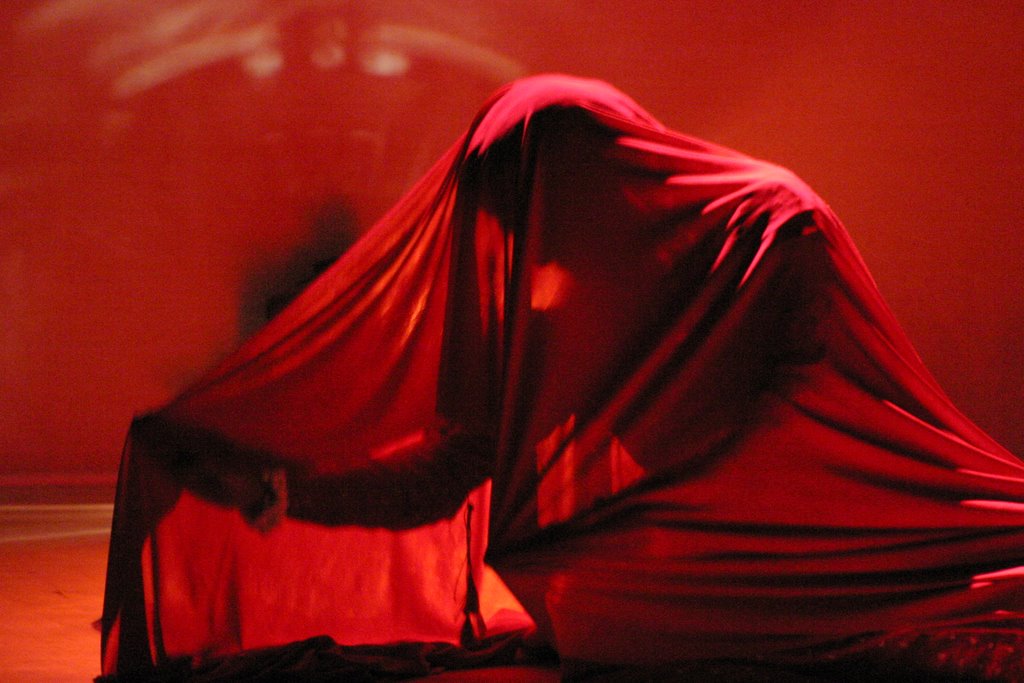
Depicted by the hues of red worn by Naheed, the show opened with Khayal, a Raga Jogeshwari, created by Hazrat Amir Khusrau in the 13th century. Slow, subtle and increasingly graceful, Naheed handled her dupatta with finesse as she very slowly transitioned between the different postures signifying khayal (thought), her prop the dupatta, casting a silhouette on the background screen, creating an almost poignant romantic air about her. Her postures mimicked those of statuettes, the alaap of the body appropriately rendering salaam (greetings); Khayal had an understated beauty and set the mood for the rest of the evening.

Tarana — a Raga Chandra Kauns, followed after, another creation of Amir Khusrau. It had a lighter feel to it and was more playful in nature, the play being between Naheed Siddiqui and the tabla. It is difficult to imagine the piece being choreographed; Naheed clearly enjoyed herself and seemed to dance by the ear rather than by counting the taal.

Naheed’s student, Ahsan Nadeem, joined her in the third composition, Illusions — a Raga Suddh Sarang, which was meant to depict the merging of reality and fantasy and that the lines that define them are not what they seem to be. Naheed and Ahsan at first seemed to be each other’s shadows but the subtle differences in their moves soon rectified that initial impression. Ahsan was clearly the illusion in this inter-play between reality and fantasy. Had it not been for the stage presence that Naheed commands naturally, she would have been overshadowed by her own student. Graceful and delicate in his movements, Ahsan danced with emotion, displaying a lightness which gave the illusion of him dancing on air. He is a student Naheed should most definitely be proud off.


The best part of the evening, where Naheed truly seemed to come to life was in the last composition, Rhythm of Life — a Raga Jaijaiwanti. Set to a rhythmic cycle of 16 beats, Rhythm of Life was an improvisational piece. Known for pausing between performances to explain the philosophy of the Kathak dance and the meaning of her gestures, Naheed stayed true to that reputation and while her musicians tuned their instruments, she addressed the audience, talking about the importance of supporting classical dance and of projecting a softer image of Pakistan; she further explained the improvisational nature of Rhythm of Life.


Before her next performance, Naheed repeated the bol of the sequence she was about to follow and launched herself into a delightful dance, clearly displaying her mastery over tatkaar. The exuberance she displayed made it all the more enjoyable. At the end of it all, she received a full two-minute standing ovation from the audience. So far there is no comparison to Naheed Siddiqui in Kathak and she enjoys mastery over some of the most difficult tatkaar compositions.

Although the event was primarily focused on dance, it was disappointing to see that the rest of the crew members including the musicians and vocalist were kept rather in the background. The fact is that the crew contributed equally in making the show a success and therefore should not have been ignored. However, despite the routine hiccups that threatened to jeopardize the evening, the APMC team managed to pull off the event enjoyably, and they deserve to be commended for their effort.

Credits:
All of the photographs were taken by Amean J.

Note:
Only the photograph on top from this particular ensemble is been part of those that had been published in print.

First Published:
Images
June 18th, 2006

Tuesday, May 30, 2006

Tools of the trade
[Cover Story]

Spider talks to four professionals and asks them about the hardware and software they use to get the job done.


Profiles:

Sabeen Mahmud:
"I bought my f
irst Apple Macintosh computer in 1990. It was an all–in-one unit with a nine-inch screen and a single floppy drive. It had one megabyte of RAM, an eight megahertz processor and no hard disk. This machine, along with Pink Floyd, changed my life forever."
Currently the COO of b.i.t.s., Sabeen has been associated with computers for over 15 years now. Having produced her college newspaper and the Asian Womens’ Magazine on her Macintosh while at college, she joined Enabling Technologies (ET), a firm specialising in multimedia development, after graduating. Sabeen believes that she has a natural inclination for multimedia authoring and graphic design and when the internet was introduced in Pakistan, she gravitated towards Web development. She ran Solutions Unlimited – a sister concern of ET – from 1999 to 2000, while managing projects at ET and teaching New Media Development at Hamdard University. In 2001, she joined b.i.t.s. as a New Media Architect where she also performed the additional roles of managing the day-to-day operations and looking at areas of business development. She considers the Faiz–Aaj Kay Naam interactive CD, on which she worked as a lead programmer and graphic designer, as her greatest achievement to date.

Amean J.:

"I’m an Apple person. Everything is compatible with my iPod so everywhere I go, I have everything with me. I’m more of an iPod freak than a computer freak."
A professional photographer and part-time teacher, Amean attained his Bachelor in Fine Arts from the Academy of Art College in San Francisco and a Masters in Arts from the University of Luton, United Kingdom. Besides getting local acclaim for his unique style of capturing images, Amean’s work has also been mentioned in foreign publications such as The New Yorker, Colours, and Graphics and Communication Arts. In 1998, he established 18 per cent grey, a Karachi based photo studio, with a team dedicated to ensuring the finest details are maintained in the photographs produced. 18 per cent grey has managed to acquire a diverse portfolio of clients, by using photography for graphic design, print and multimedia productions, advertisements, annual reports and corporate work.

Babar Shaikh:
"
I have never really been a fan of completely falling slave to computers as such. I have friends who have slept right underneath their computer tables, woken up and gotten straight back into their chairs and that’s kind of sickening because I don’t fancy their lifestyles at all."
Musician, film-maker, writer and artist, Babar Shaikh has, at the age of 27, proved himself to be as capable as any of the veterans working in the same field. Babar formed the band Dusk in 1994 and they released their debut album 2.5 kilometres from the Tower three years later. Babar then concentrated on his academics and graduated from the Indus Valley School of Art and Architecture to become an art director in an advertising agency before taking on film-making as a full-time profession. He has to his credit the Kitni Sadiyaan video by Mizraab, which stayed on number one for several weeks. Not limiting himself to music videos, Babar has made several documentaries, of which Tabdeeli found its way to the Kara Film Festival in 2005. Babar also teaches at the Karachi University and at the Indus Valley School of Art and Architecture.*

Hussain Ali Talib:

"I f
irst used a Windows personal computer back in 1998 and have been hooked ever since the first time I used the Web to surf and chat on mIRC."
Currently working as the editor of E-doer’s Digest and Netexpress, Hussain Ali Talib started his career with Rasala Publications when he was in college and has been with them since. He initially joined Rasala Publications as an intern in 1999 and ended up working there part-time while continuing his education. After graduating in 2001, he joined Rasala Publications as a full-time employee. Having been with Rasala for over 10 years now Hussain Ali Talib says that he enjoys working there as it provides him the opportunity to work in a challenging and exciting environment. Hussain Ali Talib describes himself as less of a person–fascinated–by–technology and more of a writer.

Interview:

Q. What kind of a computer system do you use right now?

Sabeen Mahmud: Apple Macintosh Powerbook G4 15" with 512 megabytes of RAM, 80-gigabyte hard disk, Airport Extreme (802.11g), Bluetooth, FireWire 400 and 800, USB 2.0 and internal CD/DVD writer with the following extras: 17" LG LCD monitor, Apple wireless mouse and keyboard, Apple's Mighty Mouse, LaCie 250 gigabyte Brick external hard drive, Harman Kardon SoundSticks and an iPod Shuffle with the Mac OS X operating system.

Amean J.: I use an iMac. I’m an Apple person. It’s the last generation of iMacs. Not this one (the one that is out right now), it’s the one before that. I’ve been working with the latest OS 10.4.6. That is the newer system on it. And it’s a beautiful machine.

Babar Shaikh: I use a Compaq Presario laptop. I like the convenience of a laptop and it has really been used and abused by me. It’s an AMD Athlon and it’s kind of better for European countries because it gets really hot and it really feels like it’s on fire all the time. I borrowed it from a friend of mine, for a very little while, who is an audio engineer.

Hussain Ali Talib: An Acer Aspire (AMD processor, 128 megabytes of RAM) with Windows 98 operating system.

Q. What kind of programs do you have installed on your computer?

Sabeen Mahmud: Fireworks (Graphic Design), VoodooPad, NetNewsWire, Safari, Camino, Firefox, iCal, Apple Mail, Adium, Skype, iChat, iTunes, TextEdit, Pages, Keynote, OmniGraffle, OmniOutline, iPhoto, iWeb, RapidWeaver, QuickTime, Timbuktu, MarsEdit, Merlin,Transmit, System Optimizer X, LimeWire, iSync and Interface Builder. The only Microsoft program that I occasionally use is Excel and I am awaiting the release of a spreadsheet program that will enable me to be 100 per cent Microsoft free.

Amean J.: Well, Photoshop for one, Safari for browsing and what else do I use? I use my mail software and iTunes very much. I love iTunes. I haven’t really started exploring Garage Band and I use iLife quite regularly which includes the address book, calendar (all of my appointments are on it) and everything is compatible with my iPod so everywhere I go, I have everything with me. As far as high-tech software is concerned, it’s just Photoshop for me. I haven’t tried Aperture yet, the new software by Apple, so I won’t know how to figure that one out yet.

Babar Shaikh: What do I use most of the time? That would be Internet Explorer to browse the internet, Microsoft Word as most of the stuff that I write is on that. For listening to music there is Windows Media Player.

Hussain Ali Talib: Basic office utilities: Microsoft Word, Microsoft Excel, Internet Explorer and Microsoft Outlook.

Q. What do you use your system for?

Sabeen Mahmud: Graphic design, interaction design, music, blogging, website design, audio editing, video editing, presentations and demonstrations, E-mail, Web browsing and RSS newsfeeds, page layout, project management, accounting, research, writing, system/application tweaking and modelling.

Amean J.: E-mailing, for sure. I prefer contacting my clients through e-mail for a few reasons. One, I just prefer typing as compared to talking and two, for documentation reasons because everything is documented. Three, to talk to friends all over the world. Four, music for sure and five, for editing my photographs. I don’t manually edit photographs any more.

Babar Shaikh: Other than what I’ve already mentioned, Dusk, which is my band, has been on the internet since 2001 and I’m usually updating my website and stuff but have never really been a fan of becoming a slave to computers as such. I really don’t believe in stuff like MP3s. Sure, I do have MP3s on my computer but stuff like MP3s and all this iPod culture, I don’t support it at all. I have friends who I think download hundreds and hundreds of gigabytes of really obscure music but when you talk to them, they've hardly listened to any of it. They just like to collect the tracks.

Hussain Ali Talib: Work related tasks, organising contacts and material. Internet-based research and communication.

Q. How long have you been using computers?

Sabeen Mahmud: I have been using Macs (the only computers I have ever and will ever use) since 1990. I started with a Mac Plus that had no hard disk, a single floppy drive, and one megabyte of RAM. I learned how to use MacWrite, MacDraw, MacPaint, and MS Word on that computer. Since then, I have used the following Macs: SE, Colour Classic, LC III, IIvx, Quadra 840 AV, PowerMac 8100, PowerMac 8500, PowerMac 7200, PowerBook G3, iBook, and Powerbook G4 12". Indirectly, I have used every Mac produced since the Mac Plus, as we used to sell and service Apple products. I have been using my current PowerBook for four months.

Babar Shaikh: I started using the computer in 1997. It was definitely never a part of my life before that, it was never a necessity. Mainly, I was into trading underground demos for my band through snail mail. Before that, I didn’t really realise that a computer would be necessary.

Hussain Ali Talib: I have been using computers since 1997 and this particular one for the last couple of years.

Q. On average, how much time do you spend on your computer everyday?

Sabeen Mahmud: 12 hours

Amean J.: At least four hours if not more, because even when the work is done I’m usually online at night as well, doing something or the other.

Babar Shaikh: I think my basic usage of a computer is usually two to three hours a day, or maybe a little more. I check my e-mail maybe four or five times a day and that’s usually for 10 to 20 minutes and the rest is I guess when I have to check out some stuff or get some references for my film work.

Hussain Ali Talib: On average about six hours.

Credits:
Amean J.'s photograph was taken by Izdeyar Setna
Babar Shaikh's photograph was taken by Amean J.

Spider's Email Box
The misplaced tool

In the cover story ‘Tools of the trade’ in the last issue of Spider, it was mentioned that Babar Sheikh’s band ‘Dusk’ released an album titled ‘2.5 km from the watchtower’ when it was infact his band ‘Ganda banda and the 3D cats’ that released that album.

Khurram
barzakh@gmail.com


First Published:

Spider
June 2006

Monday, May 29, 2006

Joy! Oh Joy!

[Last Byte]

A music buff’s quest to discover the perfect P2P software

The day I discovered that music could be downloaded – free of cost – using relatively simple P2P software was the happiest day of my life on the internet. It opened a world of possibilities for me. I could download any song that I wanted. I did not have to make a list of CDs to friends and relatives traveling abroad–for those not available in Pakistan–all I had to do was get an internet connection, install the software that connected me to thousands of users across the globe and using their libraries of MP3s, I could search and download to my heart’s content.

Kaaza, the software in vogue at that time had the advantage of being the first of its kind to be introduced to our local internet user population. The speed at which one could download songs was frustratingly slow: it could take from one to four days for a song to download depending on how many people on the network could share the file and how long one remained online. Those were the times when the concept of cable internet or a LAN was still relatively new and very few areas within the city offered the service.

After cable internet had been introduced in our area, I was heartbroken to discover that Kaaza wouldn’t work on it. The reason given to me back than was too technical for me to understand and I really didn’t care. What mattered was that I couldn’t download free music anymore. Friends who had no trouble downloading from other software suggested some that might work for me. They ranged from Kaaza Lite to Morpheus to Phex. They came nowhere near the simplicity of Kaaza and proved too complex for me to handle. All I wanted was to search and download songs, pictures and videos how difficult was it going to be finding software which could provide me with the above mentioned services? In my sad, depressed state of not finding the right software, I had given up all hope and had resigned myself to actually buying music online. My Kazaa years were over.

I found the answer to my prayers when a certain someone in a certain radio station introduced me to certain software that they used to download music. I went mad with joy and proceeded to spread the word around as fast as I could. It turned out “everyone” had been using that software for a quite a while.

Fast forward to 2006 and I can download an average of 150 to 200 songs a day depending on whether I spend the entire day on the computer typing, searching and selecting appropriate MP3s. The software that I now use is LimeWire and it takes an average of five minutes per song and ten minutes per music video to download.

With LimeWire, I thought I had found ‘it’ at last: the perfect downloading P2P software. LimeWire on the other hand, did have its drawbacks: relatively unknown tracks couldn’t be found and a track simply wouldn’t download if there weren’t enough users online to share it, even if the search engine conjured up the MP3 as being ‘available’ on the network. Getting back to the point I was about to make, I had thought I’d found the perfect software, till I was introduced to Azureus. A program that uses bit-torrents (sounds cool doesn’t it?) to download.

The best part is that all I have to do is go on a torrent compatible website, type the name of the album (yes, I have advanced from searching individual songs to entire albums) and select an album depending on the number of people who can share it and the number of people who are having it downloaded on their systems. It takes an average of one to four days for each album to download (similar to my Kazaa days), but it’s worth the wait because it beats having to search individual songs to download. Plus you get to see what the original CD cover looks like as each torrent file usually contains one.

From Kaaza to nothing to LimeWire and then to Azureus, not only have I discovered how P2P has evolved with time but have also noticed significant changes in the way I search online and the kind of music I download. I’ve also noticed that the idea of having the whole world’s music library at a single tap of your keyboard can be exciting at first, leading one to download all kinds of obscure music (most of which I haven’t listened to, but like to keep to show off) but after a while, it becomes a bit of a burden when one discovers they’ve downloaded practically everything cant think of anything else.

First Published:
Spider
June 2006

Friday, May 26, 2006

A revival of radio


Set in a warehouse in the Commune Artist Colony, K’la (“Art” in Hindi) performed its first ever play Tihai to an interesting mix of an audience: the event was attended by both those well known and working within the media industry and students of the Indus valley and their friends. The play had been written by Omar Kasmani and had been co-directed by Omar Kasmani himself, as well as Amean J. The cast and crew included Natasha Mukarram, Ali Hayat Rizvi, Rubab Paracha, Arsalan-ul-Haq, Amna Iqbal, Amean J., Imran Khan, Yousuf Bashir, Mansoor Wahab, Leena Naqvi, Marvi Mazhar and Rabia Ashfaque.

There were three showings of the play, one of which had been scheduled at the last moment, and all three of them started relatively on time. The set was simple, with transitions between different acts being done by alternate lighting. The event started with Omar Kasmani giving a brief introduction of the group and the play. K’la was formed as a result of a group of individuals meeting every weekend to share literature and art, and seeks a revival of drama on radio. This was clearly apparent as the play concentrated more on the script, its rendition and expression within the voice rather than on the visual aspect of body language and facial expression. Although, it must be mentioned that the actors did not entirely fail in that department, but there seemed to be more concentration on how the play ‘sounded’ rather than how it ‘looked’.

The play centered around three stories of different genres: Sartaj nahi Maharaj: breakfast with a family, Platform number three: the final dialogue and Meri pyari Su: a monologue, letter from a friend. Well written, the transitions between the different stories within the play had been cleverly done.

Sartaj nahi Maharaj centered round a typical early morning breakfast table with a family comprising of both parents and a son, with a little bit of satire thrown in. Natasha Mukarram played the typical mother, fussing over her son, her husband, the breakfast, the neighbours, the chickens*— yes, apparently this family had half a dozen chickens* running around the house. She displayed all of the attributes of an irritated housewife with ease. Ali Hayat Rizvi displayed a maturity in his acting that easily made him stand out from amongst the rest of the cast. Playing the role of the father, the timing of his dialogues matched his facial expressions to perfection. Arsalan-ul-haq, playing the role of the eleven year old son, was entertaining to say the least, however, his acting lacked the subtlety apparent in that of the other actors.

With the family tuning in to listen to a radio drama, the second story, Platform No 3, begins with Omar Akhtar performing an original piece Nazar, composed by himself, on his acoustic guitar. A story of two estranged individuals, Platform comprised confessions of a college infatuation by Sarah, played by Amna Iqbal to an arrogant Asad—intent on leaving—played by Amean J. Throughout their conversation, Sarah seems reluctant to let go of what happened, or rather what did not happen, between Asad and herself with Asad focused on moving ahead with his life, preferring to leave the past behind. Natasha Mokarram delivered well in terms of clarity of speech and expression, but her timing was a bit off. Holding an open folder with papers stacked in it, one wondered whether Amean was carrying his script around or whether that was just a prop meant to compliment the role of Asad as the lawyer, the role that seemed to come naturally to him.

Finding ourselves back with the family around the breakfast table, the third story Meri pyari Su, is introduced as a letter mistakenly delivered to the wrong house and is read by Imran Khan, dressed in a full black veil, playing the role of Su’s childhood friend. The letter is about the adventures of two friends, their many loves and their many marriages. Read in a manner similar to that in old, sub-continental movies and punctuated by giggles that invited laughter from the audience, Imran khan delivered the punch lines in the letter to perfection. The audience loved him; and after the satirical humor in the first and the seriousness in the second act, Meri pyari Su proved to be the perfect ending to a pleasant evening.

Although in the first showing, the sound system fell short of delivering clarity of speech, it was a pleasure to see that this problem had been rectified in the second and third showing. For a first performance that was sold out within two days of its announcement, K’la did well and as a group, seem to hold promise. Omar Kasmani, on naming the group K’la says, “We do not want to restrict ourselves when it comes to theatre. We have a lot of other skills. I have a background in classical dance, Amean is a photographer, there are other people who have theatre background, someone can sing and so on. Our objective was to keep such a generic name so we could fit in all kinds of performances. K'la is a result of that thought”.

*chickens was supposed to be "chics", it got edited to "chickens" somehow.

First Published:
Images
May 28th, 2006

Sunday, May 14, 2006

The June bug

[Over view]
June seems to be the scheduled month for the launch of the albums of three major bands in the industry— Fuzon, Aaroh and Sajid and Zeeshan. For the latter it will mark the debut of their first album while for Fuzon and Aaroh it will be an opportunity to show how they have matured and are not just one-hit wonders.

Fuzon’s highly anticipated second album, which currently remains untitled, will be released after a gap of about four years since their first. They had initially scheduled the launch sometime between March and April, but have since delayed proceedings until the first week of June. The overall sound of the album is supposed to be a little more upbeat and aggressive as compared to their debut, Sagar, while still maintaining the Fuzon element. The album will see them evolving more towards pop rock. The title track of the album is Neend na aye tere bina, the video of which will be directed by Sohail Javed. What is interesting to note is that the actual recording of the album didn’t take that much time—eight songs were recorded in 11 days.

Having already released two videos from their second album, Yara and Pyar ka jaal, Aaroh’s second album will showcase the guitar skills of the latest addition of their band—lead guitarist Haider. They haven’t come up with a title of their album, simply calling it Aaroh. Where the old album had a very serious dark–romantic element to it, this one attempts to deliver a lighter, funkier sound while still maintaining the old–school Aaroh touch.

The album will also display Haider’s song writing skills as according to Farooq, (vocalist and founding member) almost 90 per cent of the songs in the album have been composed by him. Shafqat Amanat Ali has also composed a song in the album titled Aik chah. With this new album, Aaroh hopes to explore the lighter side of raag.

Meanwhile, after making a mark among both fans and critics with the release of their debut single King of Self last year and bagging an award for their single Freestyle Dive, Sajid and Zeeshan will release their debut album sometime in mid–June this year, titled One Light Year at Snail Speed. Embodying the Sajid and Zeeshan sound—a fusion of acoustic, bass, percussion and house music—the album has both up– and down–tempo tracks. The album contains one jazz inspired instrumental track and also a song composed by Fasi Zaka. Sajid and Zeeshan haven’t restricted the album to an overall theme and will see them exploring different sides of their personalities and issues close to their heart.

It remains to be seen whether Fuzon’s second album will live up to the success of the first and whether Aaroh will prove itself able enough to rise again after shedding its controversial past. It will also be interesting to observe whether Sajid and Zeeshan can manage to further the small revolution they have started and carve a niche for themselves in the music industry.

*Photographs: 1) Sajid and Zeeshan, 2) Fuzon, 3) Aaroh

First Published:
Images

May 14th, 2006